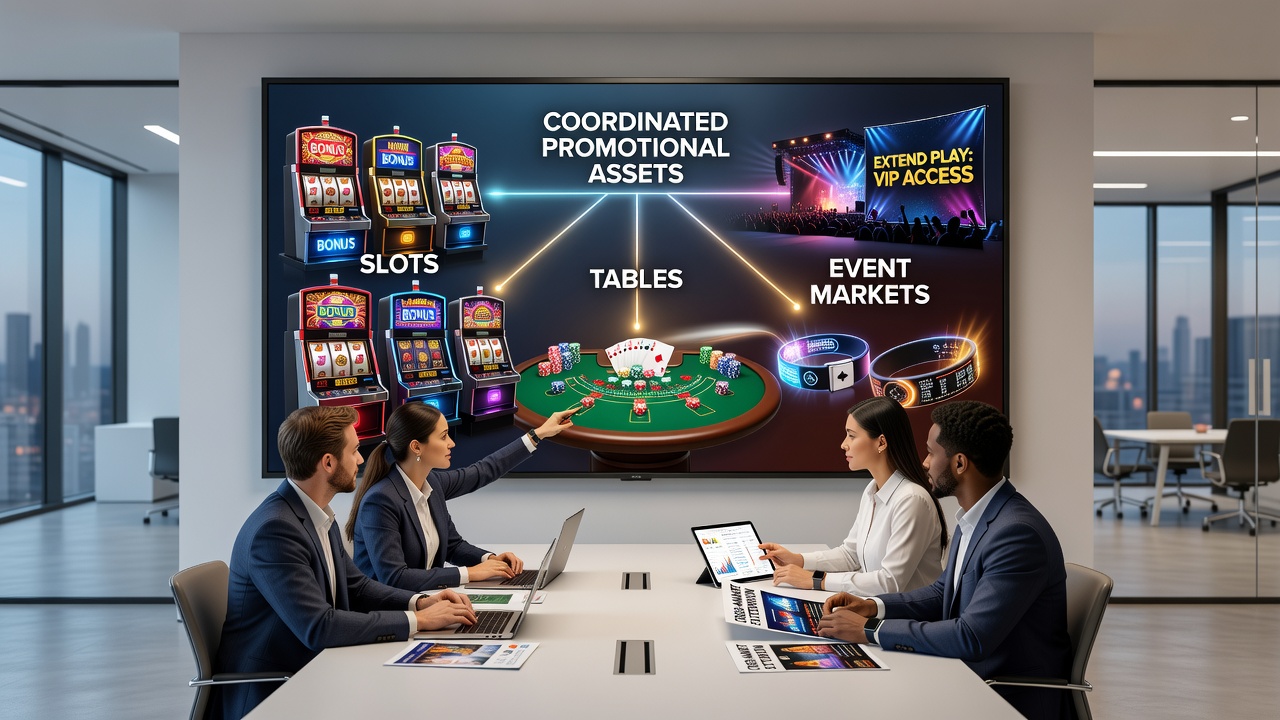
Coordinating Promotional Assets to Extend Play Across Slots, Tables, and Event Markets
Operators coordinate promotional assets such as bonus credits, loyalty points, and targeted offers to move activity between slots, table games, and event markets. This approach relies on shared player data systems that track participation across verticals, allowing a single reward structure to apply whether someone starts on a reel machine or enters a poker tournament.
Data from the American Gaming Association shows integrated loyalty programs increase cross-vertical play by linking slot sessions directly to table game comps. The same systems route event-specific incentives, such as sports betting credits earned from table play, back into slot promotions during quieter periods.
Core Components of Asset Coordination
Promotional assets function as interchangeable units when operators maintain unified databases. A free spin package earned on slots converts into table game match-play vouchers through a single redemption portal. Event markets receive spillover through timed offers that activate after a player reaches thresholds in either slots or tables, creating continuous engagement loops.
Research from the University of Nevada, Las Vegas Center for Gaming Research indicates that operators using centralized promotion engines report higher retention rates because rewards remain visible across all channels rather than siloed within one product. Players receive notifications that update in real time, showing remaining value whether they switch to live dealer tables or join a satellite tournament.
Implementation Across Slots and Tables
Slot floors generate the bulk of initial play volume, yet table games benefit when promotions carry over. Operators achieve this by assigning point multipliers that apply equally to coin-in on machines and average bet at tables. A July 2026 industry report from the Canadian Gaming Association noted several provinces testing unified multiplier systems that allow slot points to unlock table game buy-ins without separate qualification steps.
Table game managers adjust comp values based on slot data feeds, offering room credits or dining vouchers that players can redeem after any combination of machine and felt time. This removes friction that previously forced players to restart progress when moving between sections of the casino.

Extending Reach Into Event Markets
Event markets, including tournament circuits and sports betting integrations, receive coordinated assets through scheduled releases. A slot-based leaderboard might feed directly into poker satellite entries, while table game high-hand winners receive sports bet credits for upcoming matches. The Australian Communications and Media Authority documented similar cross-promotion models in licensed venues where event tickets convert back into slot or table incentives after the event concludes.
Timing matters. Operators align event calendars with slot and table promotion cycles so that a major tournament coincides with boosted point earnings on machines, then routes tournament winnings into live betting wallets. This creates measurable traffic shifts documented in operator performance dashboards.
Technology Enabling Unified Delivery
Modern player tracking platforms serve as the backbone. These systems tag every promotional asset with metadata that defines eligibility across slots, tables, and events. When a player claims a bonus on a slot machine, the same record updates table game and event profiles automatically. Integration with third-party sportsbooks and tournament software ensures the asset remains active regardless of the next chosen activity.
Operators update rules in one location and the change propagates across all channels. This reduces administrative duplication while maintaining consistent player experiences, as confirmed in operational reviews shared at the 2026 Gaming Technology Summit.
Measurement and Adjustment Practices
Success metrics track redemption rates, time between vertical switches, and total handle generated from coordinated campaigns. Teams monitor which asset types drive movement from slots to tables most effectively, then reallocate inventory accordingly. Event participation data feeds back into slot and table promotion calendars, closing the loop.
Geographic variations appear in regulatory environments. Venues operating under Nevada Gaming Control Board guidelines follow strict reporting on cross-product offers, while similar programs in Australian states emphasize consumer protection disclosures that appear on every redemption screen.
Conclusion
Coordinated promotional assets create measurable continuity between slots, tables, and event markets when operators maintain shared tracking infrastructure and consistent redemption rules. Data from multiple jurisdictions shows increased session lengths and vertical switching when rewards travel with the player rather than resetting at each section boundary. Continued refinement of these systems depends on accurate cross-channel analytics and alignment with regional regulatory reporting standards.