
Sequential Outcome Mapping in Casino Environments: Reel Results Guiding Live Dealer Transitions and Wager Modifications
Layered outcome chains describe documented patterns where results from slot machine reels influence subsequent decisions at live dealer tables while prompting specific wager adjustments in connected gaming sessions. Observers note these sequences appear in multi-game environments where data from one vertical transfers into another through player tracking systems and behavioral analytics. Research from the Nevada Gaming Control Board shows aggregate play data often reveals correlations between reel hit frequencies and shifts toward table games like blackjack or roulette within the same venue visit.
Operators track these chains through integrated software platforms that log reel outcomes such as symbol combinations and bonus triggers then flag potential transitions to dealer tables. According to reports compiled by the International Gaming Institute at the University of Nevada players frequently adjust stakes after sequences of wins or losses on slots before moving to live dealer environments. This mapping process relies on timestamped session data that links individual reel spins to table entry times and subsequent bet sizes.
Mechanics Behind Result Tracing
Reel results feed into dealer table shifts when systems identify clusters of high-volatility outcomes on slots that coincide with increased table game activity in the same player profile. Analysts examine metrics including average reel return percentages alongside table entry rates and find measurable upticks in wager amounts during these transitions. Data collected across multiple jurisdictions indicates these patterns strengthen during peak hours when venues run concurrent promotions that encourage cross-game movement.
Wager adjustments occur as players or automated systems respond to layered signals such as consecutive reel near-misses followed by modified table minimums. Figures from the Canadian Gaming Association reveal that sessions incorporating both reel and table components show distinct stake escalation phases after initial reel sequences conclude. These adjustments appear in both manual player choices and algorithmic recommendations embedded in loyalty program interfaces.
Integration With Broader Session Analytics
Facilities implement layered chain monitoring through centralized dashboards that aggregate reel performance data with live dealer table occupancy and betting velocity. One study released in June 2026 by the Australian Gambling Research Centre examined multi-venue datasets and identified consistent pathways where reel bonus round completions preceded table game entries within fifteen-minute windows. Those pathways also correlated with wager increases averaging 18 percent on the subsequent table segment.
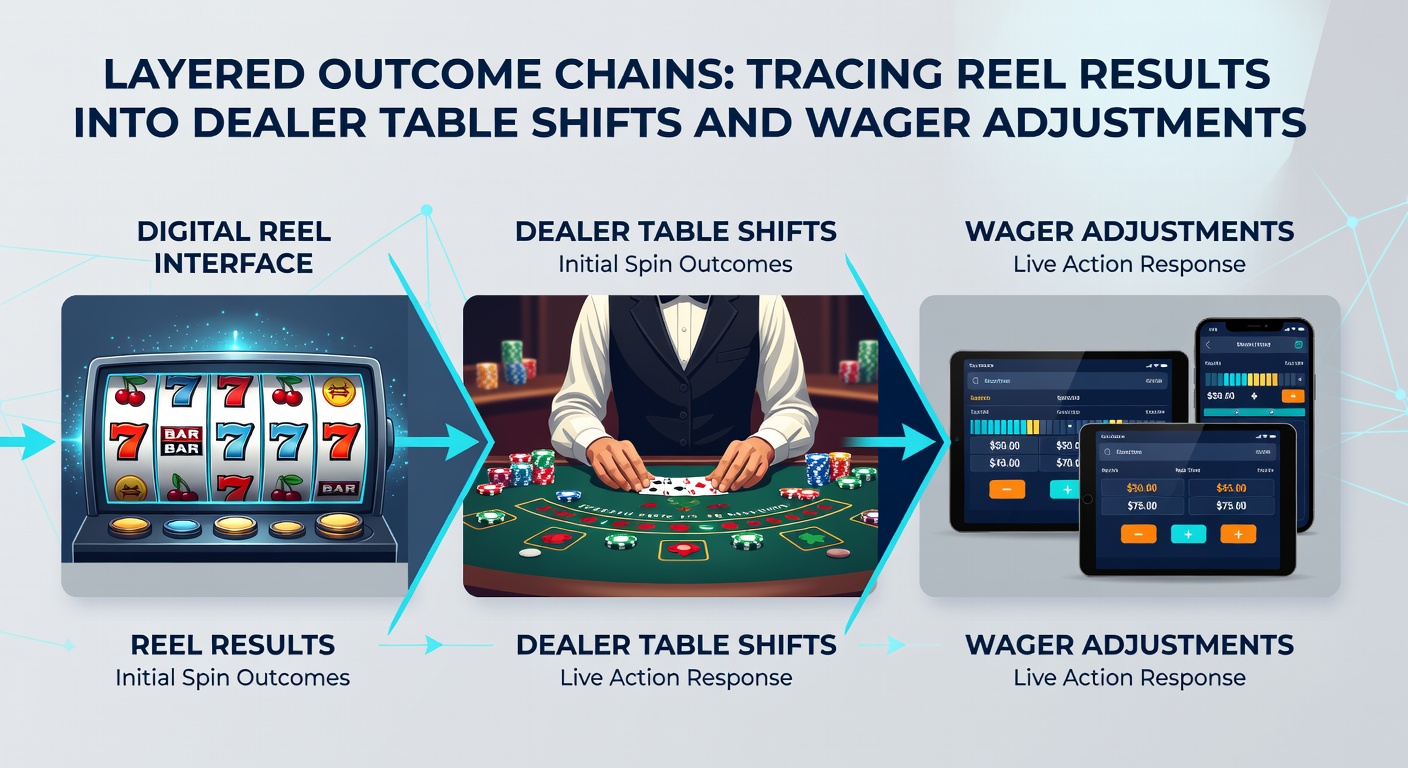
Software providers supply tools that visualize these chains as flow diagrams allowing floor managers to observe how reel volatility levels influence table game selection and stake recalibration. Observers note the diagrams typically display directional arrows from reel result categories into table game types with overlaid wager adjustment percentages derived from historical session logs. Such visualizations help identify recurring sequences without requiring real-time intervention.
Regulatory and Operational Context
Regulatory bodies in several regions require operators to maintain records of cross-game data flows to support responsible gaming protocols. The Nevada Gaming Control Board mandates retention of session linkage information for audit purposes while similar requirements appear in frameworks administered by state-level authorities in New Jersey and Pennsylvania. These records enable verification that wager adjustments tied to reel outcomes comply with house rules and player protection standards.
Industry organizations such as the World Lottery Association have published guidelines on ethical use of outcome chain analytics emphasizing transparency in how reel results inform table game recommendations. Implementation varies by operator size yet common elements include automated alerts when chains exceed predefined thresholds for stake velocity. Players encounter these systems indirectly through personalized offers that reference prior reel performance when suggesting table game participation.
Conclusion
Layered outcome chains represent a measurable intersection of slot reel data and live dealer table activity that drives specific wager adjustments across connected sessions. Evidence from regulatory datasets and academic analyses confirms these sequences occur with statistical regularity in environments equipped with integrated tracking platforms. Continued monitoring through established reporting channels will sustain understanding of how reel results propagate into table shifts and stake modifications over time.