
Synchronizing Session Timings with Bonus Cycles in Virtual Table Games and Digital Betting Platforms
Operators in online gaming environments have developed detailed approaches to align player activity periods with promotional intervals, particularly within virtual table settings and broader wagering ecosystems. This coordination relies on data from user behavior patterns and platform analytics, where timing influences participation rates across blackjack, roulette, and sports betting interfaces.
Research from academic institutions such as those affiliated with Monash University shows that structured alignment between play schedules and offer availability can extend session durations by matching peak user availability with bonus activation times. Platforms collect timestamped engagement metrics to identify optimal windows, then adjust promotions accordingly without disrupting core game mechanics.
Core Elements of Promotional Window Mapping
Virtual table environments operate on continuous server cycles, yet promotional features activate during specific intervals such as evening peaks or weekend surges. Analysts track these patterns through aggregated logs, noting how deposit matches or cashback triggers coincide with higher login frequencies in regions across North America and Europe. Wagering markets add another layer, where live event odds refresh in tandem with table game bonuses to create cross-product flows.
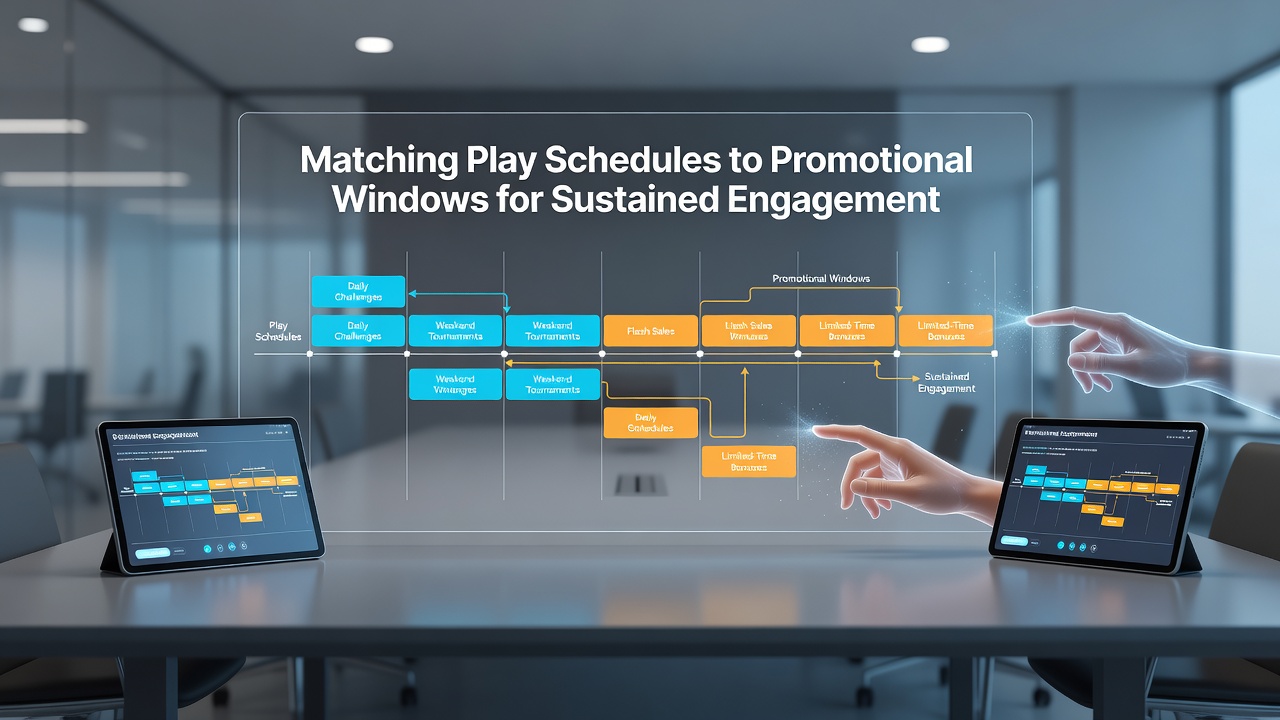
Data from industry reports compiled by groups like the Canadian Gaming Association indicate that operators segment users by historical activity clusters, then overlay promotion schedules to capture those clusters. For instance, a midweek table tournament might pair with an accumulator boost in sports markets, drawing participants who would otherwise log off after shorter sessions. This method draws from observed correlations between promotion start times and retention curves rather than isolated game features.
Implementation Across Table and Wagering Formats
Matching occurs through algorithmic scheduling tools that reference past performance data. In virtual tables, live dealer sessions often receive targeted reload offers during afternoon lulls, while automated roulette variants see stake multipliers during evening overlaps. Wagering platforms extend this by linking pre-match promotions to table game sessions that conclude near event start times, allowing seamless transitions between products.
One documented approach involves staggered rollout sequences where initial bonuses activate at 6 PM local time across multiple time zones, followed by secondary offers at 9 PM for users who remain active. Figures from platform audits reveal that such layering maintains consistent traffic without requiring constant new user acquisition. Observers note that integration with live odds feeds in betting markets further supports this rhythm, as table game pauses can redirect attention to upcoming fixtures.
Measurement of Engagement Outcomes
Tracking relies on metrics including repeat login rates, average session length, and cross-product movement. Studies released in early 2026 by research arms of European lottery and gaming associations demonstrate measurable lifts in these indicators when schedules align with user time zones and device usage peaks. June 2026 updates to several platform dashboards incorporated refined filters for promotional overlap, allowing operators to refine intervals based on real-time participation data.
Analyses further separate outcomes by game type, showing that virtual table users respond more consistently to time-bound cashback than fixed-amount rewards, whereas sports bettors show stronger uptake when promotions bridge pre-event and in-play phases. These distinctions emerge from comparative datasets rather than assumptions about preference.
Technical and Regulatory Considerations
Backend systems must handle dynamic offer deployment without latency issues during high-traffic windows. Compliance teams reference guidelines from bodies such as the Nevada Gaming Control Board when setting activation parameters, ensuring that promotional mechanics remain transparent and auditable. Integration between table engines and betting ledgers requires synchronized clocks to prevent mismatches in bonus eligibility across environments.
Updates scheduled around mid-2026 introduced enhanced API connections that permit finer control over window durations, reducing instances where offers expire before users complete intended play sequences. This infrastructure supports sustained activity by minimizing friction between different product categories.
Conclusion
Alignment of play schedules with promotional windows continues to shape operational strategies in virtual table and wagering spaces through reliance on behavioral datasets and scheduling precision. As platforms incorporate additional variables such as device patterns and regional time differences, the approach remains grounded in measurable correlations between timing and participation levels. Ongoing refinements, including those noted in June 2026 system updates, reflect iterative adjustments based on performance indicators rather than fixed templates.